This article is part of a series on tactical medicine and gear placement
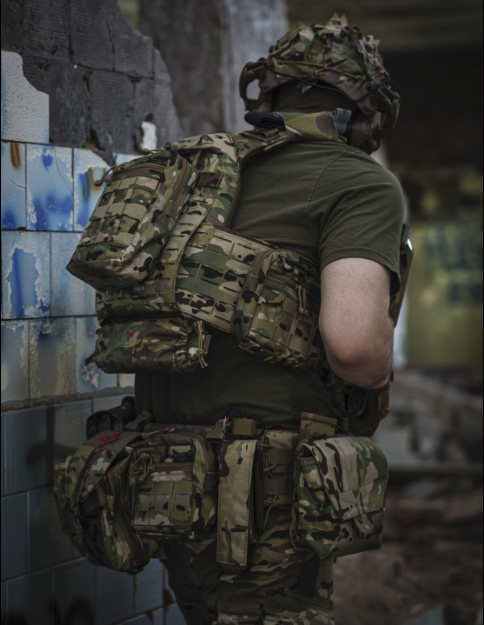
IFAKs (Individual First Aid Kit) sometimes called JFAKs (Joint First Aid Kit), are often viewed with annoyance for their bulk, and the trouble they present in finding a comfortable place on your kit. It’s something you absolutely need without being part of the sexy kit like placards, fast mags etc. It’s something you hopefully won’t have to use, but something you’ll wish was better stocked when you do.
Overarching principles/ TLDR:
- Stock your IFAK with quality supplies. No cheap Chinese knockoffs; especially when it comes to tourniquets (TQs).
- Place your IFAK and TQs somewhere you can reach.
- Make sure your squad mates/teammates know where your IFAK is located and know where theirs are. Everyone in your squad/training group/range buddy needs to know where your IFAK is on your kit, how it’s organised and how it deploys. You also need to know where their TQs are placed.
- Don’t use your IFAK to treat other people, use their IFAK on them and they’ll use your IFAK on you. This is a TCCC standard, but in everyday life, you might need to break this rule.
- Train. Take a Stop the Bleed or TCCC (Tactical Combat Casualty Care) course and study when the course is done.
Now, what you’ve all been waiting for, lists:
What to stock?
Everything recommended below is in line with the most up to date TCCC Guidelines (2026)
Good:
- (X1) Tourniquet
- CAT, SAM Xt, SOF-T, Dnipro-2. Beware of fakes. We’ll get an article up soon on how to identify these.
- (X1) Pressure bandage
- Nothing cheap like Rhino Rescue. There are a lot of good options out there.
- (X1) Hemostatic gauze
- Combat Gauze or Celox.
- (X1) Compressed gauze
- (X2) Vented chest seal
- NAR Hyfin, SAM, HALO, and Beacon are good options.
- X1)Decompression Needle
- Recommend ARS Needle Decompression kit from NAR. There are others, but we haven’t used them so can’t recommend.
- (X1) Thermal survival blanket
- (X1) Trauma shears
- Steer away from cheap shears. You need to cut through boots and belts with these. X-Shears are a great option.
- (X1) Sharpie/Permanent marker
- Just use a sharpie. The ink won’t smudge or run when wet.
- Gloves
- Don’t go for the cheap ones. They rip easily and you end up contaminating yourself and your patient.
- No black gloves. You can’t see blood on black gloves when performing a blood sweep.
- (X2) Alcohol wipes
- (X1) Casualty card
- Make sure it’s in the language of the country you’re in or the language of the teams in the MEDEVAC chain. This card will be used by role 2 and 3 (higher levels of medical care) to reassess the patient and decide on continuing treatment.
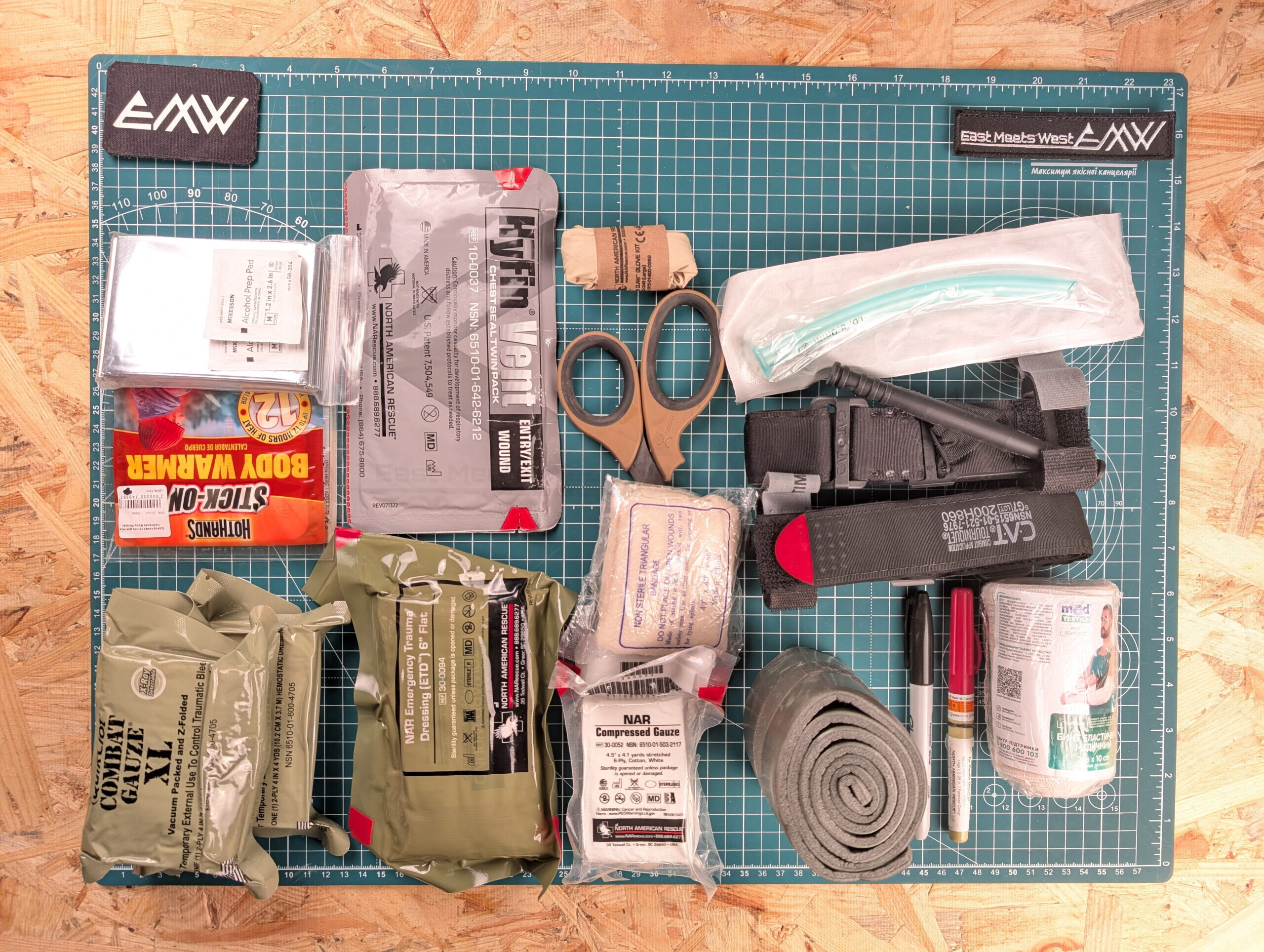
Best: ”One is none, two is one, three is two…”
- (X4) Tourniquet
- (X1) Pressure bandage
- (X1) Elastic Bandage (ACE wrap for our American readers)
- (X2) Hemostatic gauze
- (X2) Compressed gauze
- (X2) Vented chest seal
- (X2)Decompression Needle
- (X1) Naso Pharyngeal Airway
- Make sure it is correctly sized for you. Size 32 Fr is the average that fits most adults.
- (X1) Thermal survival blanket
- (X2) Active Warming Element
- Hand/body warmers like HotHands work well. Just a blanket doesn’t return lost heat to the body, it only reflects remaining heat. To reverse the onset of hypothermia you need active warming.
- (X1) Burn Dressing
- Dry burn dressing is recommended. Wet can be used on minor burn patients without other significant trauma.
- (X1) Gloves
- (X4) Alcohol wipes
- (X2) Eye Shield
- (X1) Triangular/Crevatte Bandage
- (X1) Splint
- SAM Splints are the standard
- (X1) Trauma shears
- (X1) Sharpie/Permanent marker
- (X1) Surgical Tape
- 3M is great, usually still sticks on blood and sweat
- (X1) Casualty card
- Combat Wound Pack
- Paracetamol, Meloxicam, and a broad-spectrum antibiotic. Different countries recommend different antibiotics based on antimicrobial resistance and laws vary on whether you can purchase over the counter.
The Why:
Why stock 4x TQs? The most common injuries on the Ukrainian battlefield are shrapnel wounds from drone strikes/drops. Wound patterns from these explosions can result in massive bleeding from wounds across multiple limbs. Additionally, you may need two TQs to stop the bleed on one limb, you’re up shits creek if you can’t stop the bleed from both wounded limbs, unless your friendly neighbourhood medic is able to reach you in time. With evac times ranging from 6 hours to a week in some cases, it’s best to be prepared.
Why stock so much gauze? Bullets and shrapnel are good at making deep holes and wounds eat gauze like you wouldn’t believe. You’d be surprised how much gauze you can pack into a wound that on initial assessment seems small. Good wound packing also demands a nice pretty mushroom of gauze on top of the wound to allow the pressure bandage to actually exert direct pressure on the packed wound. You can easily expect to use 1-3 packets of gauze on one wound, and like we discussed with TQs, there will very likely be more than one wound in need of packing.
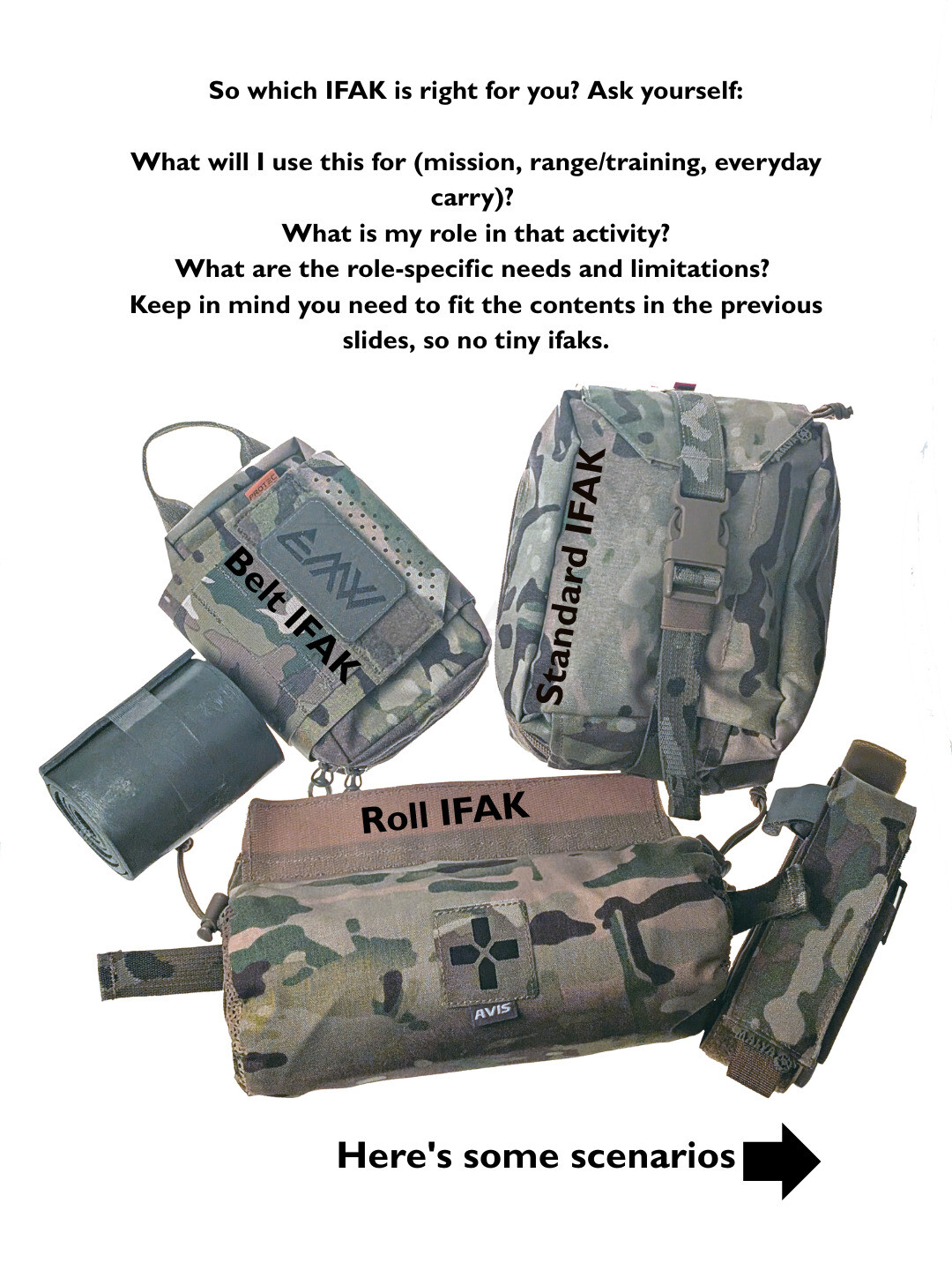
Common Types of IFAK Pouches, Their Placement Options and Pros/Cons
Roll IFAKs:
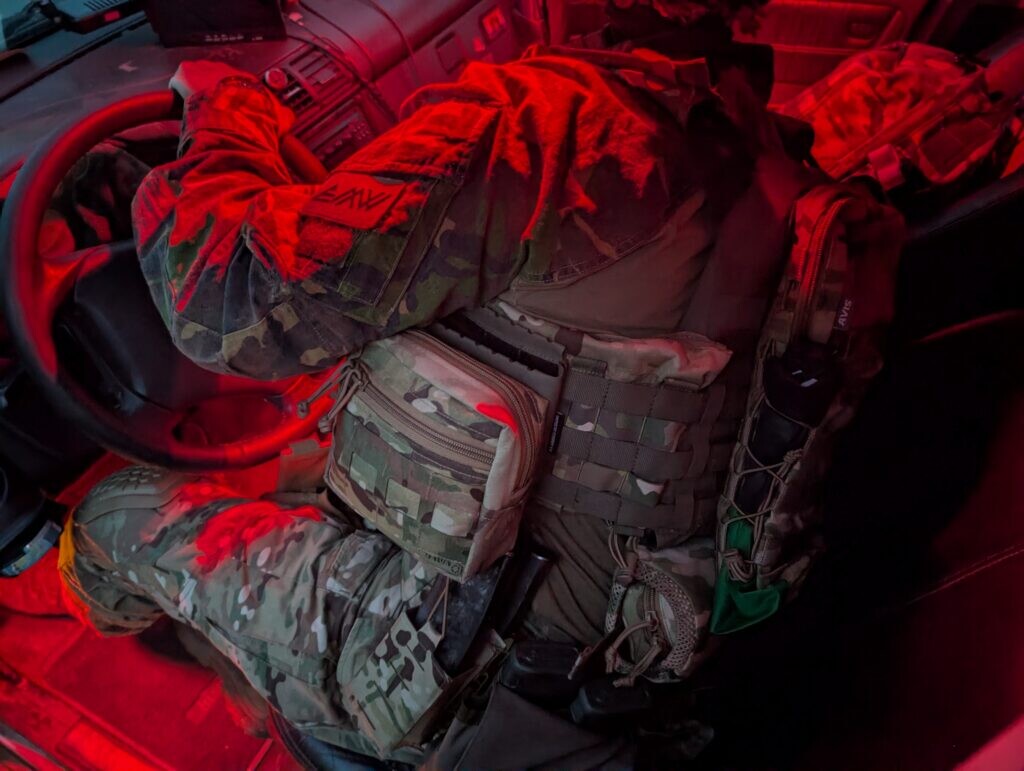
Roll IFAK (Top Left and Middle) Pros:
- Comfortable lumbar support when riding in a vehicle
- Unobtrusive, doesn’t get in the way of a weapon or prevent you from going prone. Allows arms to move freely and reach belt-mounted pouches easily. Doesn’t jam up against the steering wheel, get snagged entering and exiting vehicles, or introduce bulk to the already cramped back of an evac vehicle
- Takes advantage of unused space on the rear plate carrier bag, being both out of the way and within easy reach
- Deploys rapidly and easily via quick pull tabs. Once deployed, all the contents sit in a nice tray you can set on the ground and work from.
- Can be reached by both hands and be reached in the prone position
- Depending on the model, like the Avis Roll IFAK, it can provide ballistic protection for the lower back with a soft armour insert
Roll IFAK Cons:
- Not as much space— you’ll probably want to carry some extra med supplies in another pouch. This isn’t necessarily an absolute negative because it allows you to avoid running one, extra bulky IFAK pouch.
- Discreet location— again, not a big con. Just make sure that your teammates know where your IFAK is located.
Belt Mounted IFAKs
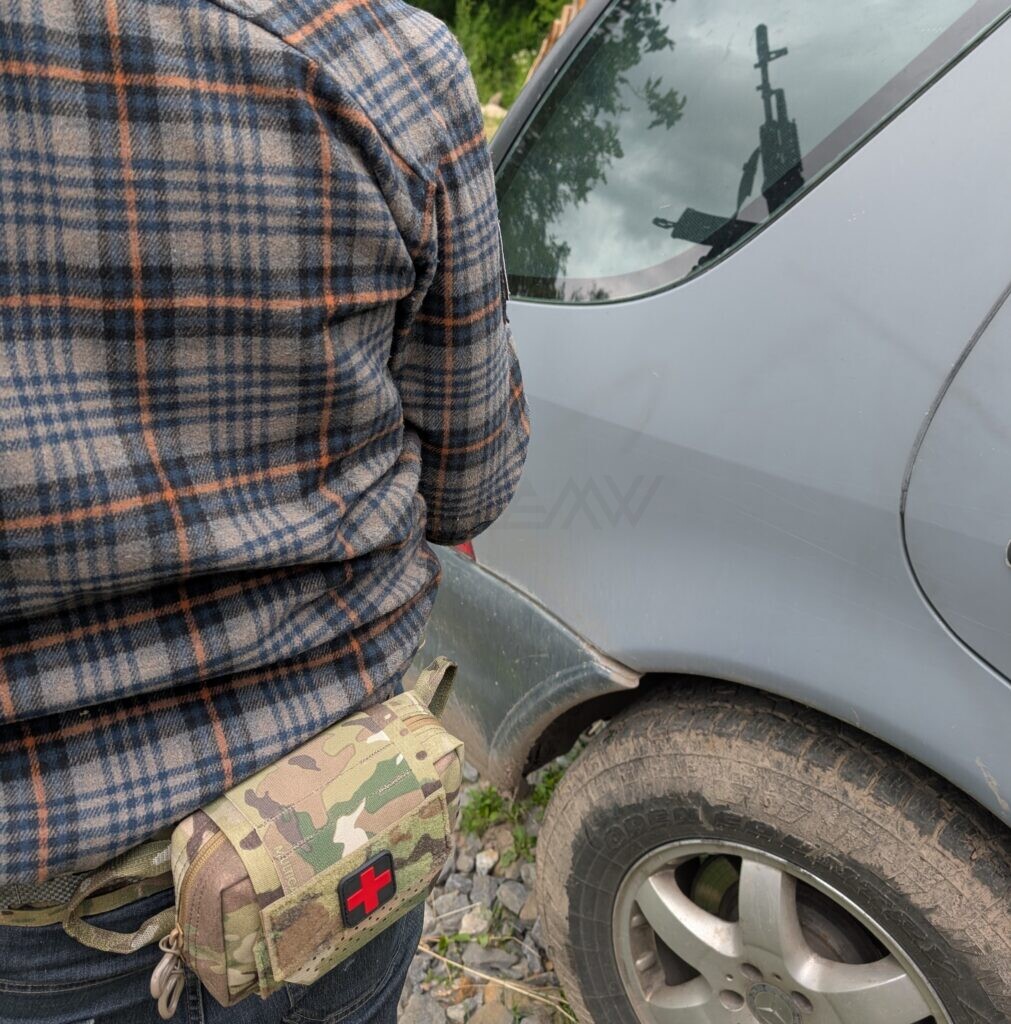
Belt mounted IFAKs pros:
- It’s still there when you take off your plate carrier.
- Fairly low profile option, still usable in a vehicle based role.
- Doesn’t get in the way of a weapon or prevent you from going prone
- Can be reached by both hands and be reached in the prone position
- Deploys rapidly and easily via quick pull handles. Once deployed, all the contents sit in a nice tray you can set on the ground and work from.
Belt mounted IFAKs cons:
- More limited space than other options
- Takes up valuable belt space
- Will still push you forward in your seat a bit if mounted at the rear of the belt.
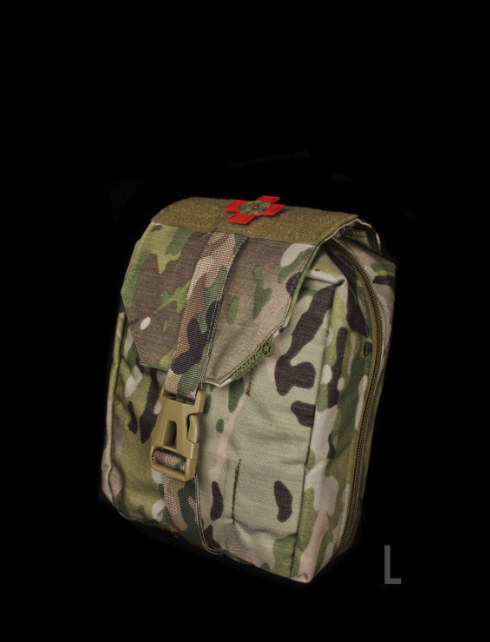
Standard IFAKs Pros:
- Spacious and easy to organise— you can fit all you need and a bit more
- Tear-away feature: Unclip one buckle and you can tear the pouch off the velcro base panel. Not as fast as the Belt Mounted or Roll IFAK, but still gets the job done pretty fast.
- Familiarity- most people have trained with a standard IFAK and instinctively know where to find critical items.
- A good option to have in your car driving anywhere. (Until the EMW Provisions VFAK finishes production and hits the shelves)
Standard IFAK Cons:
- Bulky. Tend to stand out from your body wherever you mount them on your kit.
- Difficult to find a comfortable mounting position for these.
Everyday Carry IFAKs
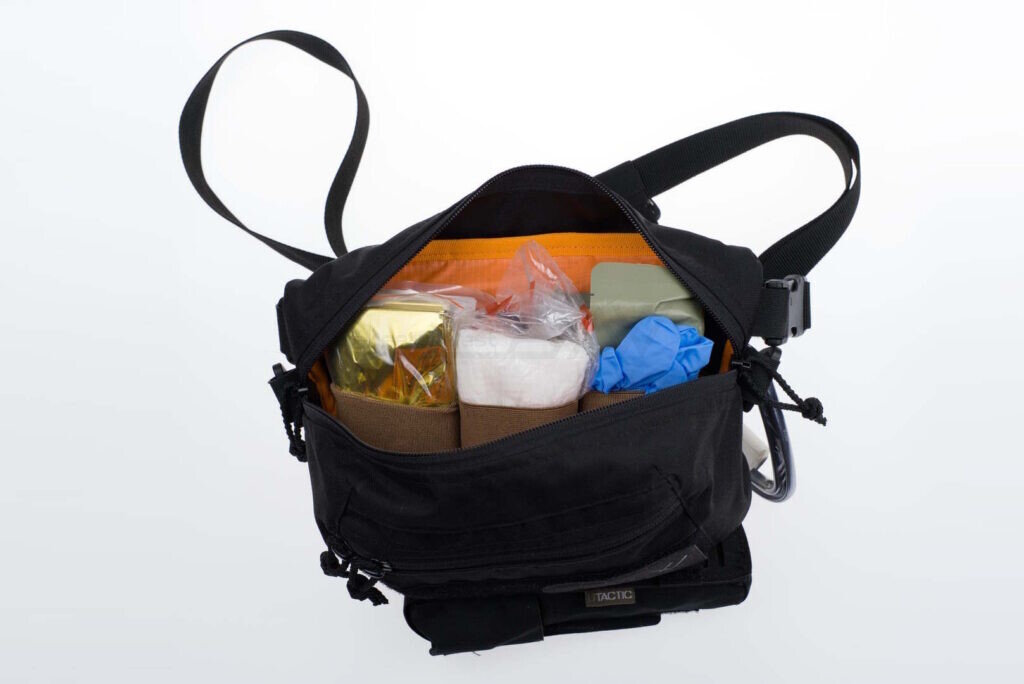
The items you stock in your Everyday Carry (EDC) IFAK shouldn’t differ too much from what you’re putting in your standard tactical IFAK. The main difference here is in the way you store and carry those items. No one wants to walk around with a bulky IFAK pouch or be that guy wearing a belt mounted IFAK in downtown Berlin. You want to be able to carry your med supplies inconspicuously alongside everything else you take when you head out the door. So, what are your options?
Using an organizer mounted inside of a sling bag or satchel is our preferred method:
Wrap up
Train. Take a Stop the Bleed or TCCC course and keep practising and studying after the course. Stock your IFAK with quality supplies. Place your IFAK and TQs somewhere you can reach with either hand. Make sure your buddies know where your IFAK is located and know where theirs are and how they deploy. Inspect your buddies’ and your own IFAK(s) regularly. Replace expired/damaged/worn/non-quality items.
Use the IFAK pouch that works for you. Think about these questions: What will I use this for (mission, range/training, everyday carry)? What is my role in that activity? What are the role-specific needs and limitations? Keep in mind you need to fit the contents mentioned above, so no tiny IFAKs.
Thanks for reading,
The EMW Team
Author: Andrew