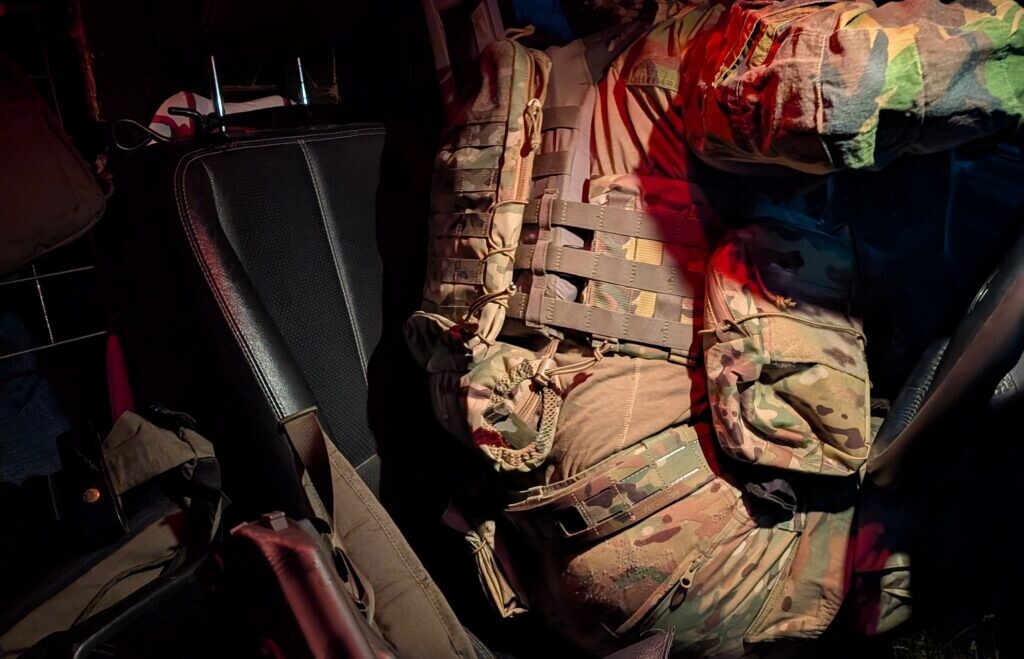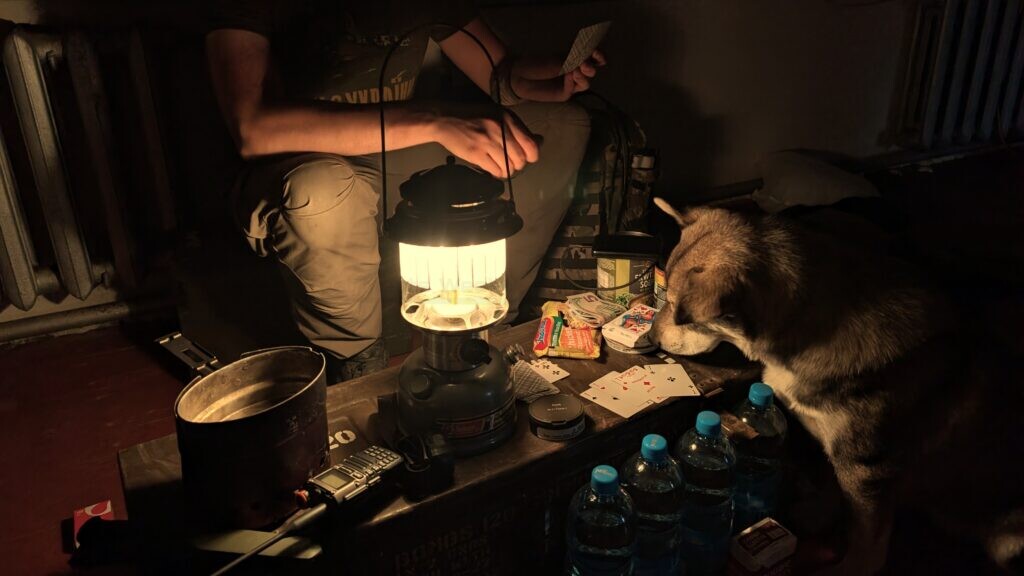
This is the first article in the series “Preparedness at Home” where we cover civilian readiness topics.
What is preparedness or readiness? To put it simply, it just means that you have the basic supplies, tools and skills to see you through unexpected, potentially dangerous situations. Unfortunately the word “prepared” has been tainted in recent years by “preppers” and “doomsday preppers” who go off the deep end, dedicating their entire existence to preparing for potential disasters. However, the basic principle remains true: It is better to be prepared than not. The key thing wrong with most of these preppers is that they are isolationist, they cut themselves off from the world. We don’t recommend that approach or think it’s reasonable.
We live in a society surrounded by friends, family, neighbors and fellow citizens. The core idea of a functional society is the support we offer to each other by living alongside one another. The ability we have to unite as a community to overcome disasters, threats, and problems. You don’t need a bunker, 10 years worth of canned goods, and an arsenal fit for a militia to successfully overcome a disaster. You need some basic supplies and a well-thought out and communicated plan made with the people around you.
Why 72 Hours?
Contrary to depictions in pop culture us humans are actually pretty resilient. 72 hours is the rough time window that it will take for both the government and people to figure out what is going on and how we are going to handle it. stores are likely to resume ”normal” operations after this initial shock and panic. Being prepared for these first 3 days is essential not just for yourself but society as a whole. Being self-sufficient for 72 hours without external help means you won’t burden an already fragile system; it reduces the strain on supply lines and systems that are likely to be in disarray.
After the dust settles normalcy will return quicker than most expect, humans are cool like that. the coffee shops in Ukraine resume operations literal hours after their windows get blown out. a walking dead scenario a lot of preppers seem to aim for is unlikely to unfold. Talk to your neighbours if they need any help.
72 hours isn’t all that long. Listen to emergency broadcasts, if the internet is still up look for trusted sources of information (we aren’t necessarily saying the mainstream media can always be trusted, but ”alternative” news sources are very likely to have an interest that doesn’t align with you or your nation in this initial shock).
Our Current Reality, Framing the Need
There are malevolent countries and entities committed to the destruction of democratic peace, and they are in overdrive attempting to corrode and disrupt democratic societies, infrastructure and economies. They see increasing amount of success with each passing day. Consequentially the need is increasing for average citizens to be prepared on a variety of fronts; not only for the fallout resulting from hostile disruptions, but to proactively combat disinformation at home and to replace fear with calm by talking with and working with people in their communities to create plans.
According to The Center for Strategic and International Studies:
“Russia is conducting an escalating and violent campaign of sabotage and subversion against European and U.S. targets in Europe led by Russian military intelligence (the GRU), according to a new CSIS database of Russian activity. The number of Russian attacks nearly tripled between 2023 and 2024. Russia’s primary targets have included transportation, government, critical infrastructure, and industry, and its main weapons and tactics have included explosives, blunt or edged instruments (such as anchors), and electronic attack.”
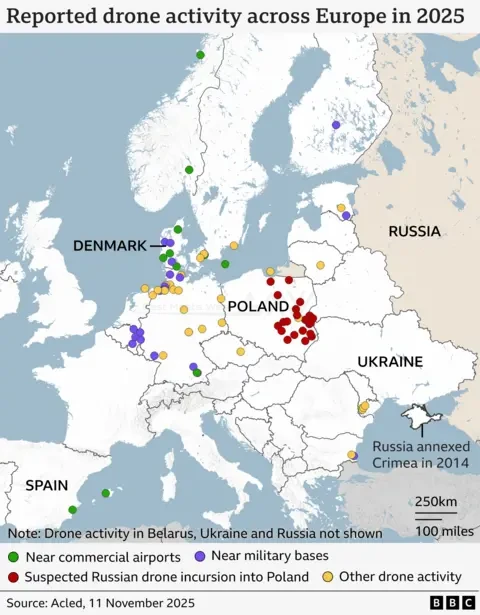
The Guardian confirms that just last April, russian hackers remotely took control of a Norwegian dam, opening a floodgate and allowing 500 gallons of water per second to flow unnoticed for four hours. A report from Northwave Cyber Threat Intelligence reports that “Months later, clusters of drones appeared over critical infrastructure in at least eight European countries, prompting these NATO states to scramble aircraft…”
Many modern emergencies result from events that disrupt our systems. For example, prolonged, large-scale power and internet outages, or banking system failures from cyber attacks. A hard truth needs to be swallowed: you will likely experience a disaster in your lifetime and it is much better to be prepared than not. This is not an attempt to cause panic, but a statistical likelihood. No one thinks about extreme weather until the hurricane takes the roof off their house, or the flood water comes under their door. No one thinks about war until the missiles land in their yard. In 2014 when russia illegally seized Crimea and parts of Donbas from Ukraine, no one dreamed that cruise missiles and suicide drones would be exploding in Poland, Romania. But here we are today, watching those headlines unfold. On a more worrisome note, The Wall Street journal reported that sources in NATO and US Intelligence recently expressed concern that russia is planning an incursion into a European member of NATO as early as this year.
Taking Steps Toward Readiness
When we think about readiness, we think in the following hierarchy: self — family/household — community. Do what you can to prepare yourself. Then, do what you can to prepare the people you live with. Then, do what you can to prepare your community. In this article we’ll discuss some basic steps you can take in your home and community to be better prepared in case of an emergency. These steps will help you in a wide variety of emergency situations, not only a full-scale invasion of your country. The first step is having an emergency kit in your home:
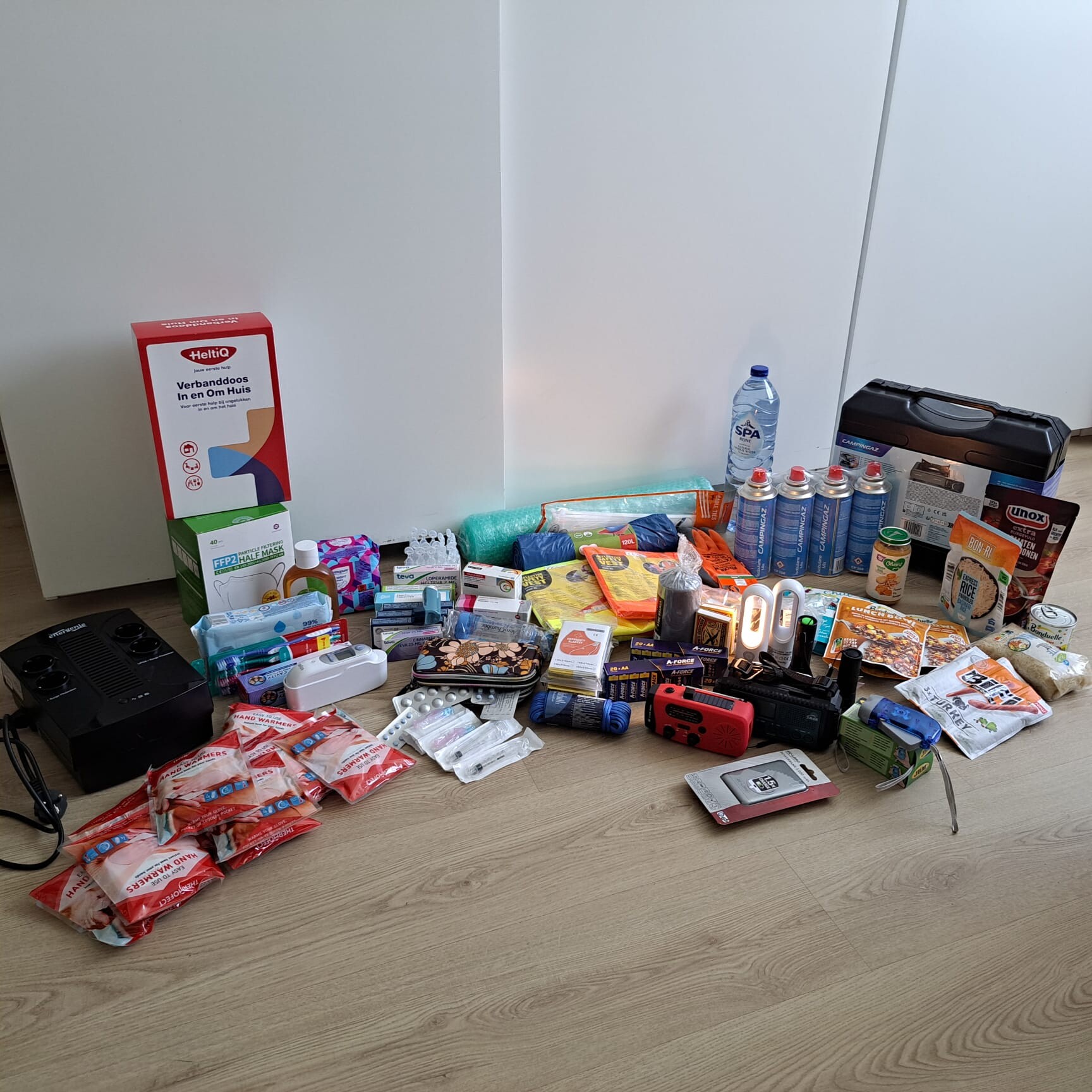
Emergency Kits: What to keep in the house
- Water:
- Sealed bottles of water: at least 3 litres/1 Gallon per person per day
- Food:
- Non-perishable food, such as tinned vegetables or meat, protein bars, nuts and dried fruit (Don’t forget manual can opener, baby food and pet food)
- If you have dietary restrictions, make sure you have enough supply on hand for 72 hours.
- Have some favorite snacks set aside, they’re a great morale boost
- Water purifying tablets or filter.
- Also consider: A small camp stove will allow you to make hot meals and boil water
- Hygiene:
- Disinfectant gel/hand sanitizer
- Toilet paper
- Wet wipes
- Sanitary towels and/or tampons
- Toothpaste and toothbrush
- Heavy duty garbage bags (useful for so many things)
- Keeping warm:
- Blankets or sleeping bags (err on the side of warmer the better, especially if your region has cold winters)
- Light and fire:
- Flashlight with extra batteries. Headlamps are also very useful and what I personally carry.
- Candles and matches
- Also consider: If your home has a fireplace or wood burning stove, make sure you have an ample store of firewood and kindling.
- Communication and information:
- Battery-powered radio
- Charged power bank
- Money and documents:
- Cash (€70 per adult, €30 per child for 72 hours)
- Copies of IDs, insurance policies, identification and bank account records stored electronically and physically in a waterproof, portable container.
- Paper map of the area where you live
- List of important phone numbers
- Medical and Safety:
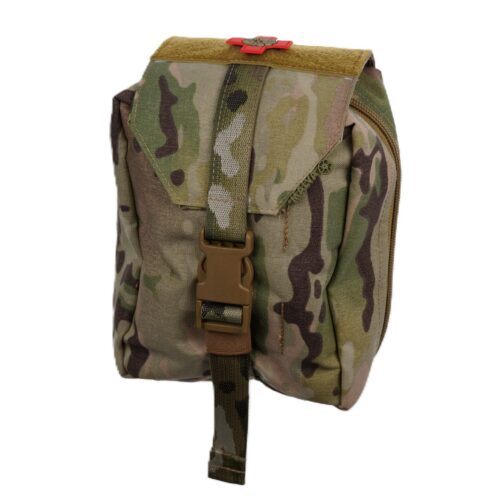
- Full Individual First Aid Kit (IFAK) for Each member of the household (see our article on IFAKs here)
- Basic wound care kit for small scrapes, lacerations, and burns.
- Prescription drugs
- A whistle to attract attention or let the emergency services know where you are
- Other useful items:
- Multitool (such as a Leatherman, Gerber or Swiss army)Tools (such as a hammer, saw, wrench, pliers, and wire cutters)
- Extra batteries
- Backup battery (like an Ecoflow) for your wifi router and laptop.
- A watch that doesn’t require charging
- N-95 or equivalent mask(s) for each member of household
- Plastic sheeting, scissors and duct tape (to shelter in place)
- Complete change of clothing appropriate for your climate and sturdy shoes
- Paper, pencils, pens, and sharpies
- Deck of cards
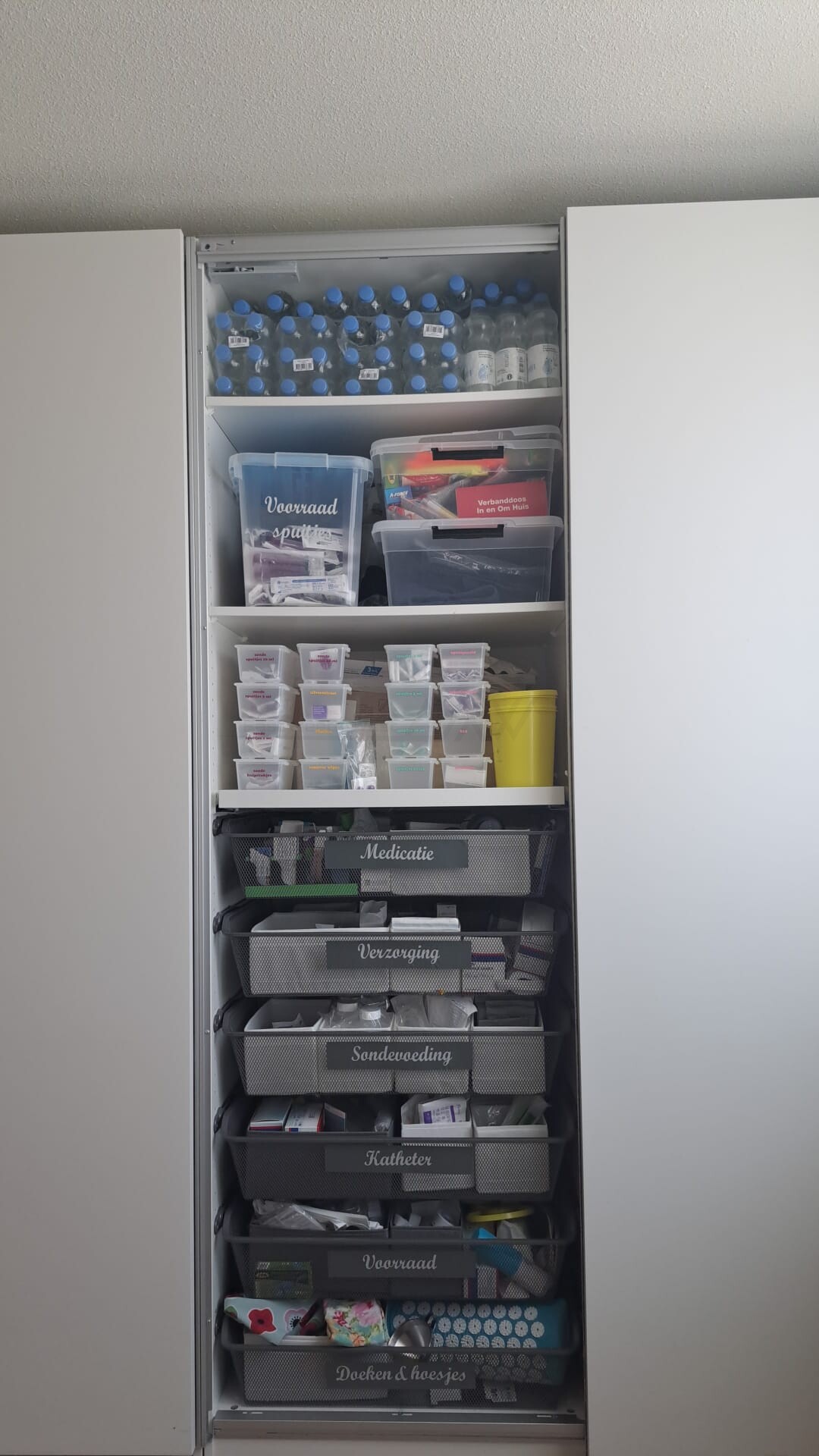
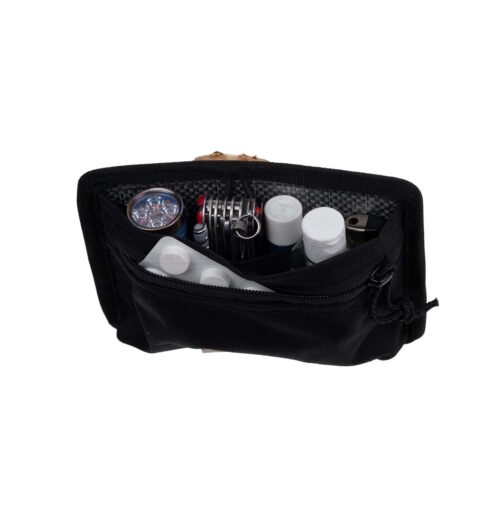
None of this needs to be overly expensive, we aren’t trying to cash in on fear here. Most of this can be stored in a basic duffel bag or a plastic storage bin and stowed away just in case. Prepping is a massive industry that cashes in on fear, it needn’t be. Zip-lock bags work just fine as organizers. But we would be honored to supply you with some neat storage solutions and equipment to make your kit more functional, more durable, and easier to use.
Last thing: don’t build your kit and forget it. Maintain it, check it, update it. Things expire, food goes off, batteries age out.
Make an Emergency Plan
Having a written plan is absolutely necessary and something you’ll be grateful for when the time comes. When you’re under stress, it can be hard to remember a plan and make decisions, a physical plan gives you a roadmap to follow in these moments. Here are some things to consider when making your plan:
Who: Who is responsible for those in need of special assistance? List of important contacts and phone numbers
Where: Where can you go if you need to evacuate. Where will you meet if you are separated and cannot make contact
How: will we get accurate information?
Agree & Talk: Agree on the plan and discuss with everyone involved. Walk through it. Practicing reps= less stress and chaos when the time to enact the plan comes.
Have a main plan and a contingency plan. For military folks, think PACE (Primary, Alternate, Contingency, Emergency) planning.
Perhaps the most important part of any planning, is communication. Discuss it with everyone involved: family, housemates, children, neighbors, local emergency services. We cannot stress enough the importance of talking through your plan with other people. It is this network of people in communities who keep each other safe and who bring a reasonable calm to difficult situations. When everyone has a clear understanding of what they will do, panic and fear are greatly diminished. We do this by talking to each other and planning.
A solid plan contains clear agreements with the people around you on who will do what in an emergency situation. For example, how you will reach or locate each other, where you will meet if you can’t reach each other by phone, and arrangements for anyone requiring extra help like elderly family members or children. You can write your emergency plan on paper, or on your phone or computer. Make sure you have a paper copy for if there’s a power or internet outage. Discuss the emergency plan with your partner, children, parents, and neighbours. Here are some scenario-based questions that an emergency plan will help to answer:
To answer some of these questions you’ll likely need to talk to your local emergency services, your local physician, your family, and your neighbors. You don’t have to do that all at once, just start with your family or housemates first and then go on from there.
Below we’ve provided a link to an example emergency plan issued by the Dutch government. This is not how every emergency plan needs to look and it’s not an exhaustive plan that covers every detail. You may want to include more or less, but it is a great starting point.
Author: Andrew
Citations:
Jones, Seth G. “Russia’s Shadow War Against the West.” Center for Strategic and International Studies, March 18, 2025. https://www.csis.org/analysis/russias-shadow-war-against-west.
Bryant, Miranda. “Russian Hackers Seized Control of Norwegian Dam, Spy Chief Says.” The Guardian, Aug. 14, 2025. https://www.theguardian.com/world/2025/aug/14/russian-hackers-control-norwegian-dam-norway.
Van der Maden, Sander and Michel Mollema. “How Russia’s Hybrid Threats Redefine Risk for Europe’s Businesses.” Northwave Cyber Security, Oct. 23, 2025. https://northwave-cybersecurity.com/article/russias-hybrid-threats-to-europes-businesses.
“U.S. Intel Finds Putin Could Test NATO’s Resolve With Limited Incursion,” The Wall Street Journal, Aug. 7, 2026, https://www.wsj.com/world/europe/u-s-intel-finds-putin-could-test-natos-resolve-with-limited-incursion-e3b02e2c.
“Begin Making Your Emergency Plan Today.” Denk Vooruit, Feb. 6, 2026. https://english.denkvooruit.nl/documents/2026/02/06/begin-making-your-emergency-plan-today.
Related Products
-
 Malva Ammunition General Everyday Carry Organizer750,00 ₴
 -
Malva Ammunition Standard IFAK1 200,00 ₴
-
Malva Ammunition Recon Bag2 000,00 ₴